
When Reality Becomes a Weapon : First Hundred Days of TRUMP 2.0
(Book Review “ First 100 days of Trump 2.0 “)

When Reality Becomes a Weapon:
(Book Review “ First 100 days of Trump 2.0 “)
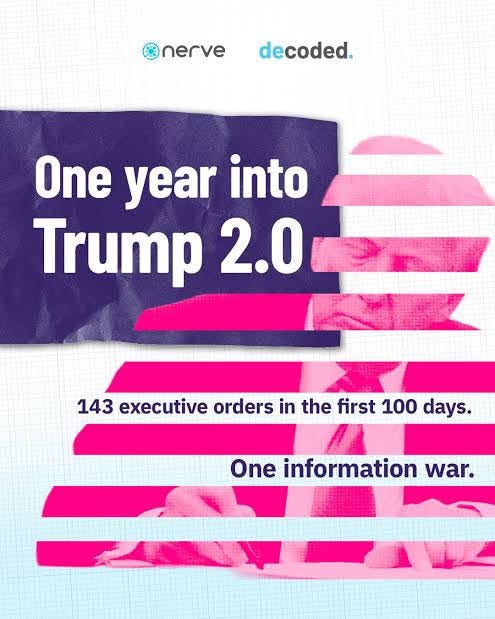
I picked up the book “First 100 Days of Trump 2.0” expecting a political play-by-play. What I got instead was something far more unsettling. This book is not just about executive orders or press conferences. It is about psychology. It is about how stories are used to shape what we believe is real.
Maria Ressa, Don Hapal, and Pauline Macaraeg argue that in Trump’s second term, the strategy was not policy first. It was narrative first. That idea hit me hard. They show how the first 100 days were less about governing in the traditional sense and more about dominating attention. Flood the zone. Trigger emotion. Repeat. Make people react before they have time to think.
I am not a psychologist, but I understand what it feels like to be overwhelmed. The book explains how fear and anger travel faster than facts. Social media platforms reward content that sparks outrage, not calm reflection. When you see something enough times, even if it is questionable, it starts to feel familiar. And what feels familiar starts to feel true. That is not stupidity. That is human wiring.
Ressa has talked about this in recent interviews, including on Amanpour and Company. She describes narrative warfare as a deliberate strategy. It is not chaos by accident. It is the use of digital systems to push emotional content so relentlessly that people lose their grip on a shared sense of reality. Once that shared reality fractures, everything else becomes easier to bend.
Reading this book, I kept thinking about how divided people have become. Friends cannot agree on basic facts. Families argue over what is real. The authors suggest that this is not just political polarization. It is psychological fragmentation. If you and I cannot agree on what happened, how can we agree on what to do about it?
What disturbed me most was the idea that confusion itself can be a tool. When there is too much information, too many crises, too many dramatic headlines, people shut down. We either retreat into our own echo chambers or give up trying to sort truth from spin. In that environment, power flows to whoever controls the loudest and most emotionally charged story.
The book also draws on Ressa’s experience in the Philippines, where digital misinformation helped normalize authoritarian tactics. The comparison is not subtle. It is a warning. Democracies do not collapse overnight. They erode when trust erodes. When institutions are constantly framed as corrupt or fake, people stop defending them.
From my perspective as an ordinary reader, the message is simple and chilling. This is not just about Trump. It is about how modern politics has learned to hack the human brain. If you can trigger fear, anger, or tribal loyalty on command, you do not need to win arguments. You just need to win attention.
The book left me uneasy, but also more aware. It forced me to look at my own reactions. When I feel immediate outrage, am I responding to facts or to a carefully engineered story? When I share something online, am I helping inform people or just amplifying emotion?
I closed the book, realizing that the fight for democracy may not begin in Congress or the courts. It may begin in our own minds. If narrative can be weaponized, then critical thinking becomes a form of self-defence. And if we lose our grip on reality together, we risk losing much more than elections in the Democratic world.
Adam Coleman
Interesting insight. But this may credit the administration with a level of coherence it has not earned. Is there really a strategy here, or just improvised chaos? And who, exactly, is meant to be the mind behind this narrative weapon? It’s difficult to imagine Trump as a long-game strategist.